
Focus: Reference framework
Sampling rounds in packaging: The problem isn’t the PDF file
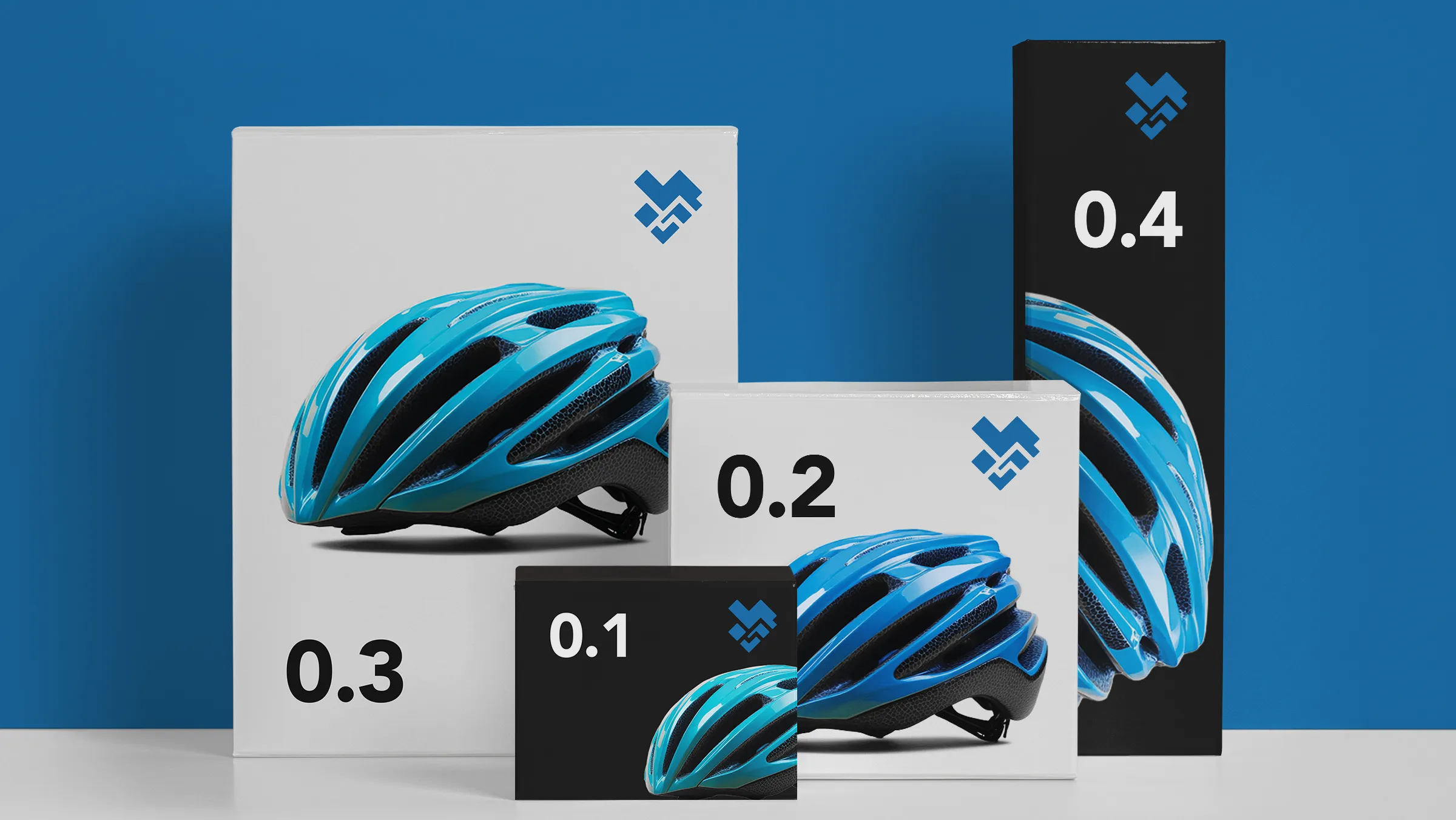
Billions of packaged products are made worldwide every year. Packaging protects what we eat, what we wear, our electronics, and even the plasters in our bathroom cabinets.
Some packaging is purely functional. Other packaging is central to a brand’s identity: Board games, high-end cosmetics, limited edition products and luxury items feature premium packaging that has become an integral part of the brand experience.
These days, the production of packaging is often organized internationally. Design, product development and marketing are frequently based in Europe, while carton production, printing and finishing are handled by specialized suppliers elsewhere, often in Asia. The Asia-Pacific region alone accounts for roughly 39% of the global packaging market (Source: Mordor Intelligence),
while Germany remains one of the world’s leading suppliers of packaging machinery (Source: VDMA).
Global collaboration makes production more efficient, but it also adds a layer of friction: Different standards, systems, technical expectations and ways of working all have to align. Any misalignments in these areas tend to surface later as repeated sampling rounds.
The real cost of sampling rounds
Cutting costs is a fundamental aim of any production process – and one of the least visible cost drivers is repeated sampling.
A sample has to be prepared, produced, shipped and circulated internally, across quality, design, marketing, R&D and sales, often all the way up to the Packaging Manager or Brand Owner who signs off on the final approval. Every round of feedback has to be collected, assessed, implemented and sent back to the supplier. The sample gets revised, reproduced and checked again.
One or two sampling rounds can be entirely reasonable when the specifications, materials and production capabilities are clearly defined from the outset. On premium packaging projects, however, with critical colors, complex finishing or international supply chains, it’s not unusual to need considerably more back-and-forth. But when this process snowballs into a fourth, fifth or sixth round, it’s rarely about fine-tuning anymore. Usually it’s a sign that one of these elements wasn’t properly defined beforehand:
- technical specifications
- material properties
- color definitions
- the supplier’s actual production capabilities
- expectations across internal departments
Every extra round takes weeks, generates additional shipping costs and CO2, ties up internal resources, and increases the risk that compromises will be made on the original artwork just to finalize the project. The project still goes into production – but often with a result that’s simply “good enough” instead of actually correct.
What causes excessive sampling rounds?
Contrary to what you might expect, the cause is rarely a simple mistake in the print file. Even a technically clean preflight (the file check that happens before production) can’t catch everything.
The desired packaging must be compatible with the chosen substrate, printing process, finishing, production tolerances, color profiles and the supplier’s specific machinery. A PDF can be entirely correct on a technical level and still not be production-ready – because packaging is more than a file.
Design, marketing, production, quality control and suppliers all look at the same project from different angles and each have their own priorities. Without a shared technical reference point, every revision creates a new interpretation, and every interpretation can trigger another sampling round. The real problem isn’t the PDF. The real problem is that the project isn’t technically ready yet.
Color: One of the most common reasons for revisions
Color is one of the most sensitive variables in any premium packaging project. Brands build their identities on precise hues, so accuracy is everything. But what looks right on a calibrated monitor won’t necessarily reproduce that way in print if the color profiles, viewing conditions, materials and print technology aren’t clearly defined.
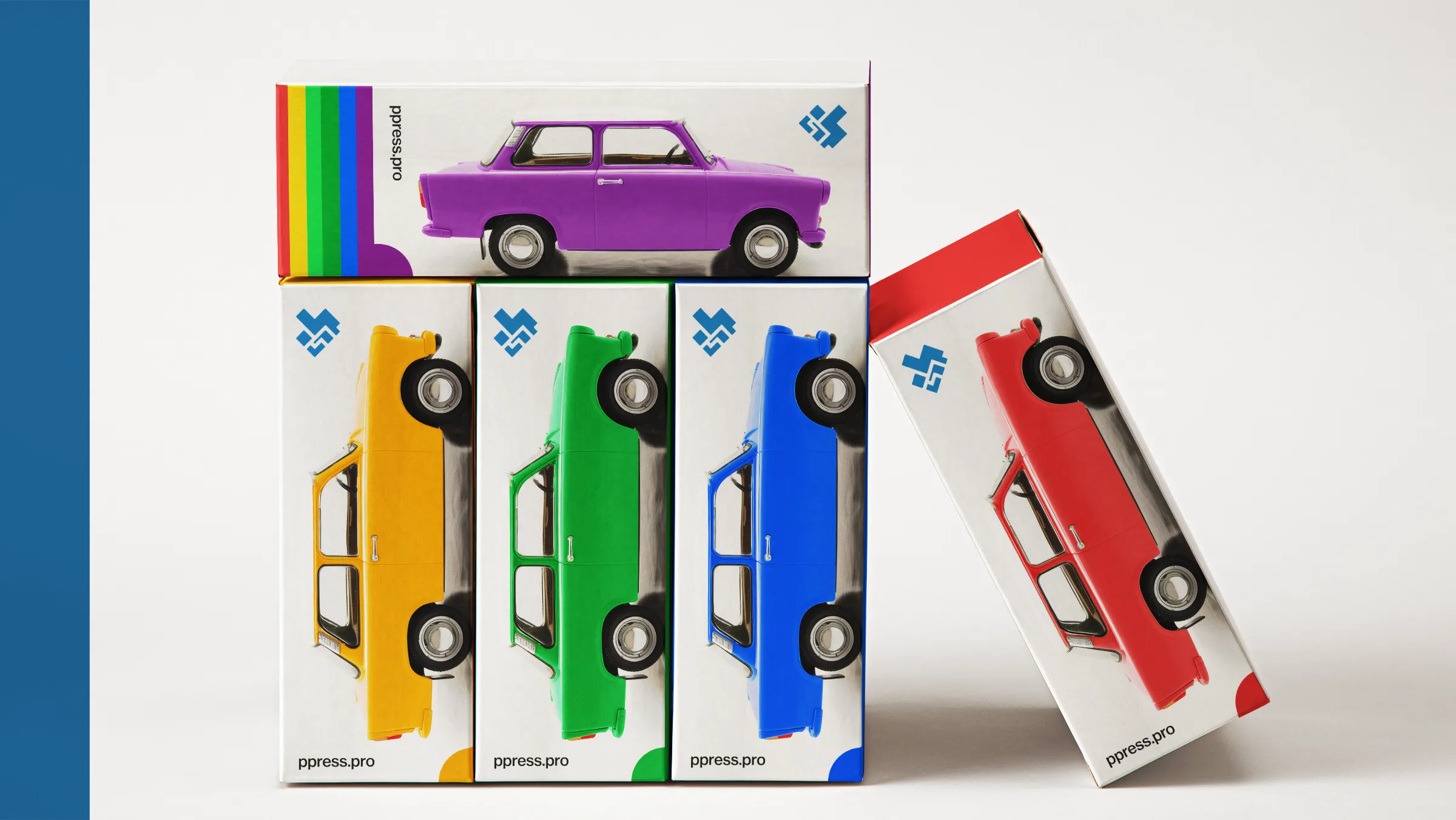
Here’s a concrete example: A product launches in five color variants, and the packaging photography or renders need to match the actual physical product exactly – for each of the five variants. If the final supplier isn’t held to that color match, a single planned sampling round can quickly turn into a full-blown coordination exercise with five packaging variants, five color approvals, and several rounds of comparison between the render, contract proof and mass production.
Many sampling rounds don’t actually test whether the result looks good. They test whether it holds up under real production conditions, whether that exact color will still fall within the specified tolerance when the thousandth unit rolls off the press. This uncertainty can be drastically reduced by a well-designed color management system, correctly prepared files, and certified contract proofs prepared in accordance with ISO 12647-7. A contract proof isn’t just a nice printout to look at – it’s the technical reference that client and supplier agree on before mass production starts.
The role of prepress
Prepress often gets reduced to a simple file check. In reality, its role is far broader. Prepress is the technical interface between design and production. This is where parameters, workflows, technical specifications and shared quality criteria get defined, so that everyone involved is working toward the same goal: A project that can actually be reproduced at scale.
When files, workflows and production partners are aligned, the number of revision rounds goes down, lead times get shorter, and decisions can be made earlier.
What “production-ready” actually means
A project is only truly production-ready once every relevant technical factor is clearly defined and understood by everyone involved:
- Color profiles and color-accurate reproduction for the chosen material
- Dielines, i.e. the technical drawings that define cuts, folds and glue areas
- Spot colors and finishing (lamination, foil coating, gold and silver foil stamping, blind embossing), along with their technical limits
- Production tolerances of the machinery involved
- Properties of the chosen substrate (board, plastic, aluminum, etc.)
- The supplier’s strengths and limitations
While this technical checklist is vital for a project’s success, it is equally as important to make sure that everyone understands it the same way. If the sales team promises a client something that isn’t technically feasible, that information can’t land on the design team’s desk and quietly become their problem to fix. It has to come out earlier, in front of everyone, at the same time.
That’s the whole point of a shared technical reference: It’s not just about setting parameters, but making sure every request —
whichever department it comes from— gets measured against production reality before it becomes someone else’s problem.
First Time Right: Less uncertainty before production
In the industry, this approach is often called First Time Right. The first sample should already be as close as possible to what mass production will actually deliver, because the technical groundwork, color definitions and production capabilities were settled beforehand – not by chance, but through a repeatable process. Nevertheless, packaging production is still a complex process, so it would be unrealistic to assume adjustments and revisions can be avoided entirely. Instead, First Time Right is about removing as much uncertainty as possible, as early as possible.
Fewer sampling rounds, more planning certainty
When hardware, software and workflow are properly set up, reduced costs are just the most visible benefit. The real win is the time you’ll save, thanks to fewer revision rounds, shorter production timelines, and fewer back-and-forth queries. Designers aren’t put under pressure by last-minute requests. The production team doesn’t have to guess what the designers meant. The sales team can make promises that can actually be kept. The process becomes less stressful for everyone involved.
What we do
This is exactly where ppress.pro comes in. Here in Berlin, we don’t just check PDFs before they go to print. We look at the entire production process.
We review existing workflows, hardware and software setups, how the teams involved work, as well as the actual production capabilities of suppliers in Europe and Asia. We define shared technical specifications, prepare genuinely production-ready files, and coordinate the technical aspects between design, marketing, production, and international partners.
Where necessary, we set up color management systems, support the rollout of reproducible workflows, and train teams to ensure that every decision is based on technical feasibility, rather than trial and error across multiple rounds of proofing and contract reviews.
The goal isn’t to fix all the mistakes by the fifth sample. The goal is to ensure the first sample is as close as possible to the final result. Because predictable production begins long before the printing press starts to roll.
Our approach is backed by more than 20 years of experience working with every part of the production chain: DTP, production software and hardware, offset and digital printing, as well as technical prepress. We have watched sampling rounds pile up for the same reasons, over and over, in Germany and in Asia, and learned from those experiences to design the method we use today. Our Fogra certifications (Graduate Fundamentals and Advanced Level) and Fiery Large Format Certified Expert status provide formal recognition of our skillset and reflect our commitment to ongoing professional development.
PPRESS.PRO
Lock in reliable and predictable print results, before production begins.
Let’s talk.